
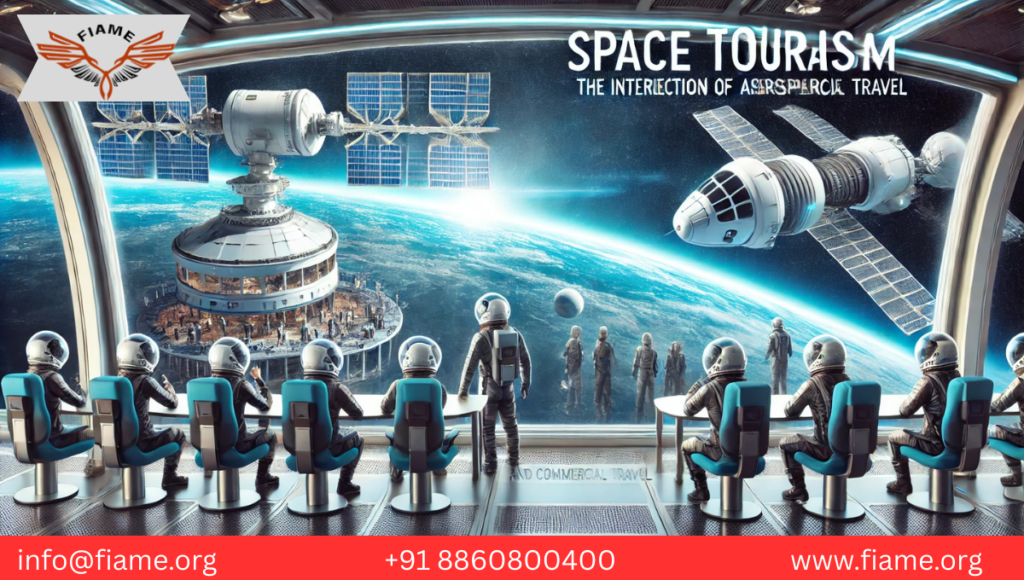
Space Tourism: The Intersection of Aerospace and Commercial Travel
Posted on : 29 March, 2025 3:30 pm
Space tourism, once a concept limited to science fiction, is rapidly becoming a reality. With advancements in aerospace technology and increasing investments from private companies, commercial space travel is now accessible to civilians. This blog explores the rise of space tourism, its technological backbone, economic impact, and future prospects.
The Rise of Space Tourism
The concept of space tourism emerged from the dream of making space accessible to everyone. Early pioneers like Dennis Tito, the first space tourist, paved the way by demonstrating that non-astronauts could venture into space. Today, companies like SpaceX, Blue Origin, and Virgin Galactic are leading the commercial space race.
- SpaceX: With missions like Inspiration4, SpaceX has facilitated private space travel using its Dragon spacecraft.
- Blue Origin: Founded by Jeff Bezos, Blue Origin’s New Shepard rocket has completed several successful suborbital flights.
- Virgin Galactic: Offering suborbital spaceflights with its spaceplane, VSS Unity, Virgin Galactic is making space tourism a luxury experience.
Technological Advancements Driving Space Tourism
- Reusable Rockets: SpaceX’s Falcon 9 and Blue Origin’s New Shepard are examples of rockets that can return safely to Earth.
- Spaceplanes: Vehicles like Virgin Galactic’s VSS Unity take off from a carrier aircraft and glide back to Earth.
- Advanced Training Programs: Space tourists undergo short-term astronaut training to ensure safety and preparedness.
The Economic Impact of Space Tourism
- Job Creation: From engineers and scientists to hospitality staff at spaceports, the industry demands a skilled workforce.
- Boost to Aerospace Industry: Increased demand for spacecraft manufacturing, propulsion systems, and maintenance services.
- Tourism Growth: High-net-worth individuals seeking extraordinary experiences drive luxury space travel.
Challenges and Concerns
- High Costs: Currently, tickets range from hundreds of thousands to millions of dollars, limiting accessibility.
- Environmental Impact: Rocket launches contribute to carbon emissions, raising sustainability concerns.
- Safety Risks: Space travel remains inherently risky, requiring rigorous testing and safety protocols.
Future Prospects
- Space Hotels: Companies like Orbital Assembly Corporation are developing space hotels for extended stays in orbit.
- Lunar Missions: SpaceX’s Starship aims to facilitate moon tourism, providing a unique experience for space travelers.
- Mars Exploration: Elon Musk’s vision of establishing a colony on Mars may offer long-term space tourism possibilities.
Space tourism represents the convergence of aerospace engineering and commercial travel. As technology advances and costs decline, more people will have the opportunity to experience the wonder of space. For aspiring aviation professionals and enthusiasts, institutions like FIAME offer educational programs to explore careers in aerospace engineering, preparing the next generation of space pioneers.