
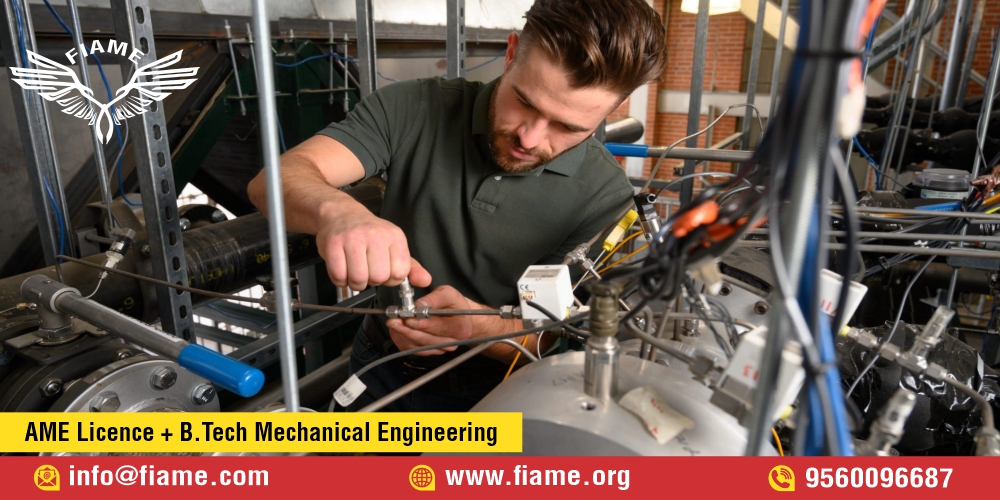
Dual Expertise: AME License alongside B.Tech in Mechanical Engineering
Posted on : 17 June, 2024 5:19 pm
Introduction
- In today’s rapidly evolving engineering landscape, the dual pursuit of an Aircraft Maintenance Engineering (AME) License alongside a Bachelor of Technology (B.Tech) in Mechanical Engineering represents a powerful convergence of technical expertise. This blog explores the synergies and advantages of combining these two disciplines, offering insights into how such a dual qualification opens doors to a myriad of career opportunities. From aerospace innovations to mechanical systems advancements, professionals equipped with both an AME License and BTech possess a unique edge in tackling complex challenges across diverse industries. This introduction sets the stage for delving deeper into the benefits, challenges, and transformative potential of blending practical aviation maintenance skills with comprehensive mechanical engineering knowledge. Join us on a journey through the intersections of AME and B.Tech, where expertise meets innovation and possibilities abound.
Benefits of Pursuing Both
- Pursuing both an AME License and B.Tech in Mechanical Engineering offers a dual qualification that enhances career versatility and depth of knowledge. It combines hands-on aircraft maintenance skills with theoretical understanding of mechanical systems, preparing professionals to excel in both aerospace and broader engineering fields. This dual expertise not only opens doors to specialized roles but also equips individuals to innovate and contribute significantly to technological advancements in diverse industries.
Career Opportunities
- Professionals with both an AME License and BTech in Mechanical Engineering can explore a wide array of career opportunities. They are well-positioned for roles in aircraft maintenance and repair, aerospace engineering, manufacturing, automotive industries, and beyond. This dual qualification qualifies them for positions such as aircraft maintenance engineer, mechanical design engineer, aerospace systems engineer, quality assurance specialist, and project manager in both public and private sectors globally.
Challenges and Solutions
- Balancing the rigorous demands of an AME License and BTech in Mechanical Engineering can pose challenges such as time management between practical training and academic coursework. Solutions include effective scheduling, prioritizing tasks, leveraging support networks, and seeking mentorship from experienced professionals. Additionally, maintaining a proactive approach to learning and staying updated with industry advancements helps in overcoming challenges and ensures continuous growth and proficiency in both fields.
Future Trends
- Future trends indicate increasing integration of AME and BTech in Mechanical Engineering, driven by advancements in aerospace technology, automation, and sustainable energy solutions. Professionals with this dual expertise will play pivotal roles in developing next-generation aircraft, enhancing mechanical systems efficiency, and pioneering innovative maintenance strategies. The emphasis on digitalization and data analytics in these fields will further shape the landscape, offering opportunities for specialization and leadership in emerging technologies.
Industry Insights
- The integration of AME and BTech in Mechanical Engineering is reshaping industries by fostering cross-disciplinary collaboration and innovation. Aerospace sectors benefit from enhanced maintenance practices and advanced mechanical engineering solutions, ensuring operational reliability and safety. This dual expertise also drives efficiency in manufacturing processes, automotive technologies, and renewable energy sectors. As industries evolve, professionals with these combined skills are poised to lead in creating sustainable and cutting-edge technological advancements.
Resources and Further Reading
- For further exploration, consider resources like “Aircraft Maintenance and Repair” by Michael Kroes and William Watkins, and “Mechanical Engineering Design” by Joseph Edward Shigley. Online platforms such as Coursera and edX offer courses in aerospace technology and mechanical engineering. Professional organizations like the American Society of Mechanical Engineers (ASME) and the Aircraft Owners and Pilots Association (AOPA) provide valuable networking opportunities and industry updates.
Networking and Professional Development
- Networking is crucial for AME and BTech professionals to build connections within aerospace, mechanical engineering, and related industries. Attending conferences like AIAA Aviation and Aeronautics Forum fosters industry relationships, while joining professional associations such as AOPA and ASME offers access to workshops, seminars, and career resources. Engaging in online forums and LinkedIn groups also enhances visibility and collaboration opportunities, ensuring continuous professional development and career advancement.
Conclusion
- In conclusion, the dual pursuit of an AME License alongside a BTech in Mechanical Engineering represents a strategic investment in future career prospects and professional growth. This unique combination equips individuals with a robust skill set that spans practical aircraft maintenance expertise and comprehensive mechanical engineering knowledge. The synergies between these disciplines not only prepare professionals for diverse roles in aerospace, manufacturing, and automotive industries but also position them at the forefront of technological innovation and sustainability efforts. As industries continue to evolve, the demand for specialists with integrated AME and BTech capabilities is expected to rise, making this dual qualification a pathway to impactful contributions and leadership in shaping the future of engineering and aviation. Embrace the opportunities that come with this dual expertise, and embark on a journey where knowledge meets innovation for a dynamic career trajectory.