
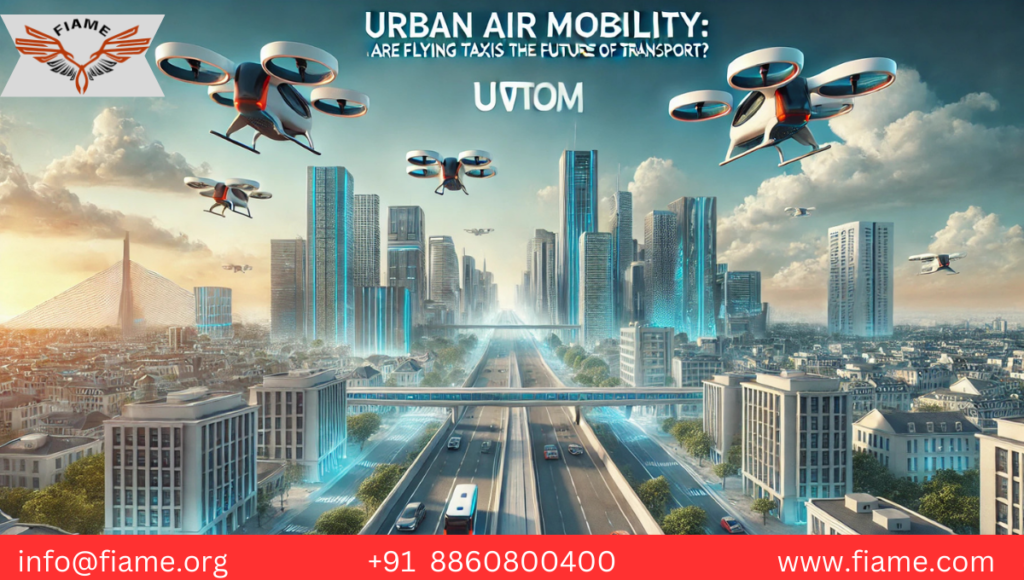
Urban Air Mobility (UAM): Are Flying Taxis the Future of Transport?
Posted on : 27 March, 2025 4:37 pm
Urban Air Mobility (UAM) is an emerging mode of air transport that envisions the use of small, electric vertical takeoff and landing (eVTOL) aircraft for urban transportation. With traffic congestion becoming a global issue, UAM presents a futuristic solution for faster, safer, and more efficient urban commutes. But how viable are flying taxis, and could they truly revolutionize transportation?
What is Urban Air Mobility (UAM)?
Urban Air Mobility refers to the ecosystem of air transportation systems that facilitate on-demand, short-distance flights within urban and suburban areas. Utilizing electric-powered aircraft, UAM aims to decongest city roads and offer quicker travel options.
The Evolution of UAM
- Conceptual Beginnings: The concept of flying cars and air taxis has existed in science fiction for decades.
- Technological Advancements: Advances in electric propulsion, battery technology, and autonomous systems have made UAM more feasible.
- Industry Involvement: Aerospace giants like Airbus, Boeing, and startups like Jody Aviation and Lilliam are heavily investing in the development of eVTOL.
How Do Flying Taxis Work?
- eVTOL Technology: Ensures safe and efficient takeoff and landing in urban spaces.
- Autonomous Operations: Many concepts involve autonomous flight systems, reducing the need for onboard pilots.
- Sustainability: Zero-emission electric flights contribute to reducing carbon footprints.
Benefits of UAM and Flying Taxis
- Reduced Travel Time: Bypass ground traffic congestion and reach destinations in a fraction of the time.
- Eco-Friendly Transport: Reduced emissions compared to traditional road vehicles.
- Convenience and Accessibility: Provide last-mile connectivity and connect urban and suburban areas efficiently.
- Job Creation: Opens opportunities for pilots, engineers, ground staff, and maintenance professionals.
Challenges Facing UAM Adoption
- Infrastructure Needs: Establishing vertiports vertical airports and air traffic management systems.
- Regulatory Hurdles: Airspace regulations and safety certifications are critical.
- Public Acceptance: Concerns over noise pollution, safety, and privacy.
- Cost Barriers: High initial costs of manufacturing and maintaining flying taxis.
The Role of Aviation Institutes like FIAME
Institutions like FIAME (Falcon Institute of Aircraft Maintenance Engineering) are preparing the workforce to meet the demands of the evolving aviation landscape. Through specialized programs in Aircraft Maintenance Engineering (AME) and Aerospace Engineering, students gain the technical skills needed to work on emerging technologies like eVTOL.
Experts predict that UAM could become a mainstream mode of transport within the next decade. Companies are conducting pilot programs, and regulatory bodies are developing frameworks to ensure safe operations. Additionally, advancements in battery technology and air traffic management will be key drivers for UAM growth.
Urban Air Mobility has the potential to redefine urban transportation, offering faster, cleaner, and more efficient mobility solutions. While challenges remain, continued innovation and collaboration between governments, aerospace companies, and educational institutions like FIAME will pave the way for a future where flying taxis are a common sight in city skies.